

 English
 русский



Picking a piston pneumatic valve usually comes down to three things: does it handle your actual pressure and flow, does the port configuration match what the actuator needs to do, and will the seal material hold up in your environment.
What's Actually Happening Inside One
A piston slides back and forth inside a cylindrical body, and that movement opens or closes the flow paths. Air pressure pushes it from one end to the other, routing supply air to different ports depending on how the valve is set up. Because the piston itself handles both sealing and switching, these valves tend to hold their position well under vibration and don't drift much in performance even after a lot of cycles.
That's why this design shows up so often in equipment where switching needs to stay predictable — actuator control, cylinder operation, anything running on tight timing. If your setup involves frequent on-off cycling, or you need something that stays exactly where it's told to stay, a piston-style valve is usually the right place to start looking.
What Actually Matters When You're Choosing One
Pressure and flow come first. Your system runs somewhere within a given range, and the valve needs to sit comfortably inside that range, not right at the edge of it. Flow matters just as much — undersize it and you'll get lag or incomplete strokes, oversize it and you're paying for bulk you don't need.
Function type trips people up more often than you'd expect. Two-position valves route air down one of two paths, which covers most basic on-off work. Three-position valves give you a neutral spot in the middle, useful when the actuator needs to hold or float between movements. Multi-port setups handle sequencing where several air paths need to switch together. Pick the wrong position count, and you'll end up bolting extra components onto the system just to compensate — which kind of defeats the point of a clean design.
Actuation method should line up with how the rest of your control system already talks. If everything's running on PLC-driven electrical signals, a solenoid-actuated valve will slot in more naturally than a manual one. In environments with electrical interference or no reliable power source nearby, a pneumatically piloted valve tends to make more sense.
Port size and connection type sound minor until you're the one dealing with a pile of adapters because nothing lined up. Every mismatch like that adds pressure drop and another spot where a leak can start — it's usually easier to check your existing tubing diameter before buying than to rework the piping afterward.
Material and seal compatibility is where corners get cut, and it tends to show up later as early failures. Moisture, oil content, and temperature swings all chip away at seal life over time. Aluminum bodies cover most general-purpose work; stainless steel shows up more in washdown environments or wherever corrosion is a real concern. NBR and fluorocarbon rubber seals handle heat and chemical exposure differently, so it's worth checking which one actually fits your conditions.
The physical environment matters too — dust, humidity, washdown cycles. A valve that runs fine on a clean indoor line can behave quite differently in a food plant that gets hosed down daily, or outdoors through a hard seasonal swing. It helps to think through where the valve will actually sit, not just what the air system spec sheet says.
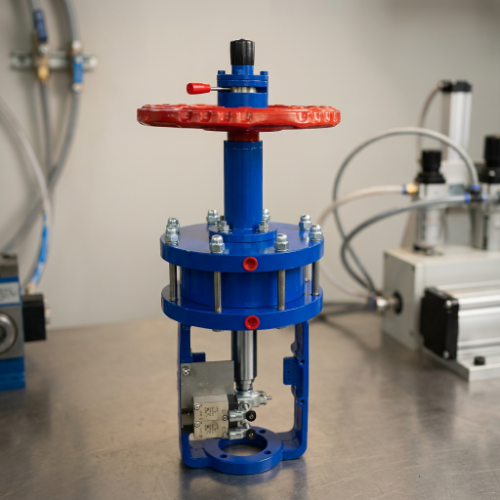
Piston Return or Spring Return?
Many valves in this category come in both piston-return and spring-return versions, and the real difference is just how they reset once the signal disappears.
| Feature | Piston Return | Spring Return |
|---|---|---|
| Resetting method | Air pressure pushes it back | A mechanical spring does the work |
| Response consistency | Steady across repeated cycles | Can drift slightly as the spring wears |
| Power-loss behavior | May hold its last position | Typically returns to a known default |
| Typical use case | High-cycle automated equipment | Fail-safe setups needing a default state |
Neither one wins across the board — it depends on what should happen if air pressure drops. If the process needs a known safe position the moment that happens, spring return is usually the more sensible pick. If the system's already built around dual air signals and consistent cycling over long runtimes matters more, piston return tends to fit better.
Where These Valves Typically Show Up
Packaging and assembly lines lean on fast, repeated cylinder actuation for sorting, pressing, and sealing. Material handling setups — conveyor diverters, pallet positioning — use them for similar reasons. Food and beverage processing almost always calls for washdown-rated bodies and sanitary seals. Industrial automation cells tend to coordinate several valves through one central controller, and mobile or off-highway equipment cares more about vibration resistance and compact mounting than almost anything else on this list.
If you're working across a few of these categories, standardizing on a smaller set of valve types usually keeps the spare parts bin simpler and shortens the learning curve for whoever's doing maintenance down the line.
Installing and Keeping Them Running
A valve chosen correctly on paper can still underperform if it's installed carelessly or left unchecked afterward. Filtering the air supply matters more than people expect — dirt and moisture are behind most early seal failures, and basic upstream filtration heads that off. Alignment during mounting is worth double-checking too, since a bracket that's even slightly off puts stress on the valve body, and that stress eventually turns into leaks or sticking.
Inspecting seals on some kind of schedule, rather than waiting for a failure, catches wear while it's still minor. If the valve calls for lubrication through the air line, keeping it consistent matters — skipping that step shrinks service intervals fast. And for solenoid units especially, keeping decent records of orientation and wiring makes troubleshooting a lot less painful months later when nobody remembers how it was set up.
A Few Mistakes Worth Avoiding
Picking a valve based on port size alone, without checking actual flow needs, is probably the most common one. Close behind it is overlooking whether the seal material can handle the moisture or oil content in the air supply. Mixing actuation types across a system without a clear reason just complicates the wiring and makes troubleshooting worse later. Ignoring ambient conditions like temperature or washdown exposure during selection is another classic. And assuming a valve that worked well in one application will automatically suit a different one, without rechecking the actual requirements, trips up more people than it probably should.
A Couple of Common Questions
What's the advantage of a piston design over a diaphragm valve?
It tends to hold its position more reliably under vibration and shows less drift after repeated cycling, which matters most in equipment running continuous automated cycles.
How do I decide between piston return and spring return?
It mainly depends on what should happen if air pressure drops. Spring return suits fail-safe applications that need a default position; piston return fits high-cycle automated equipment where consistent switching matters more.
Can the same valve work across different applications?
Not automatically. Pressure range, seal material, and port size are worth rechecking each time, since conditions that worked well in one setup don't always transfer to another.
Walking through pressure range, function type, actuation method, port sizing, material compatibility, and the physical environment before placing an order tends to head off most of the issues that show up after installation. A valve selected with these factors genuinely accounted for generally settles into stable, low-maintenance operation within the broader system.